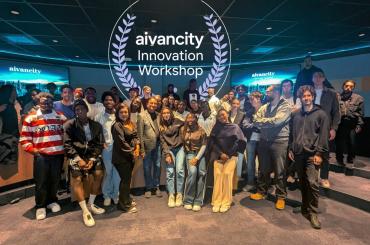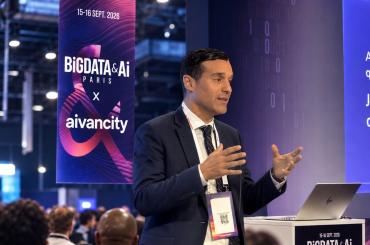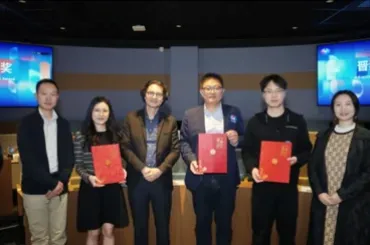



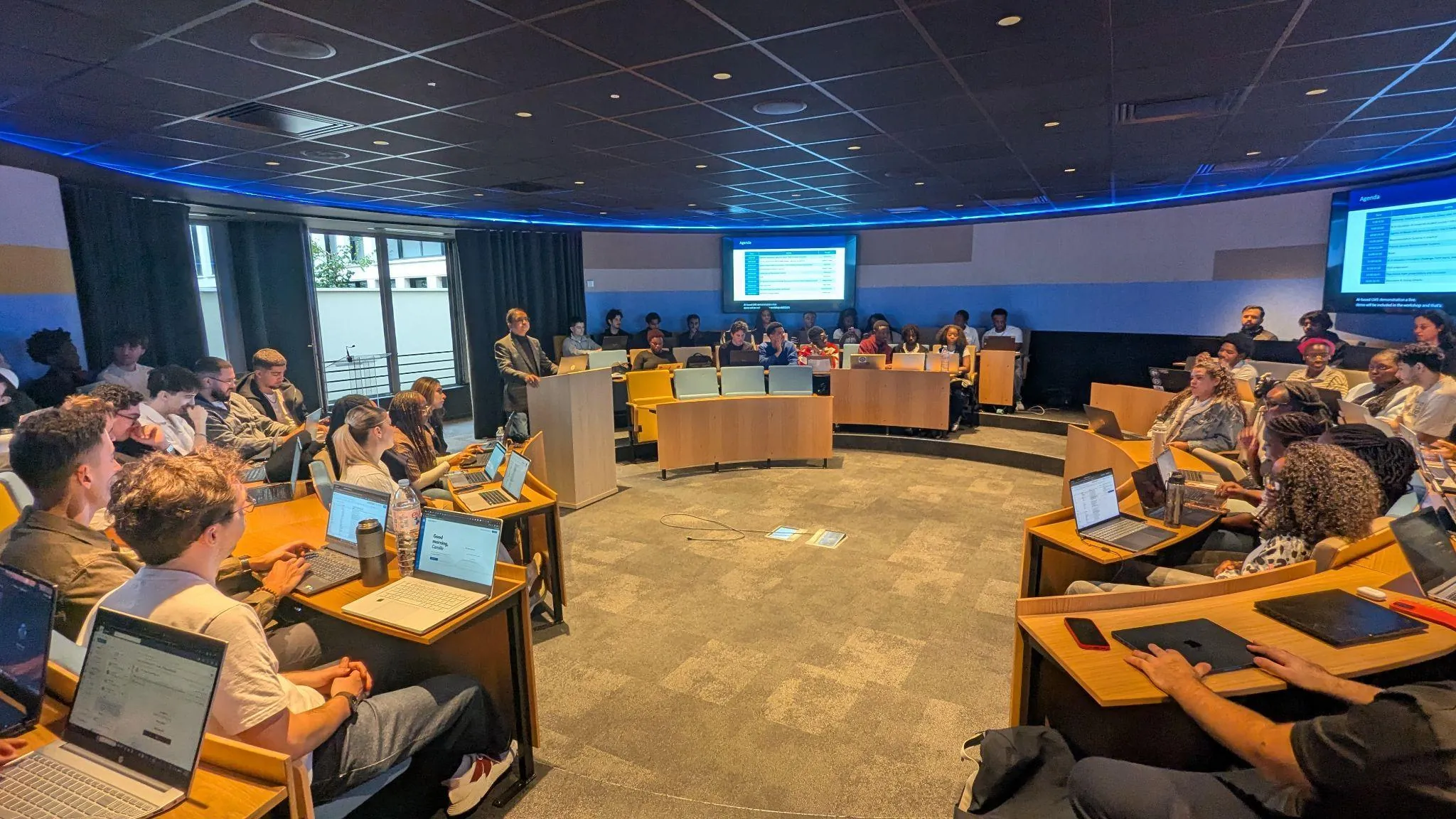
OnOctober 7, 2026, aivancity hosted Professor Subhankar Dhar from San José State University for a three-hour workshop titled “AI Workshop: From Smart Recommendations to Real-World Innovation.”
Designed for master's students, the morning session progressed from a general discussion of the ecosystem to a live product demonstration, followed by a hands-on innovation challenge.
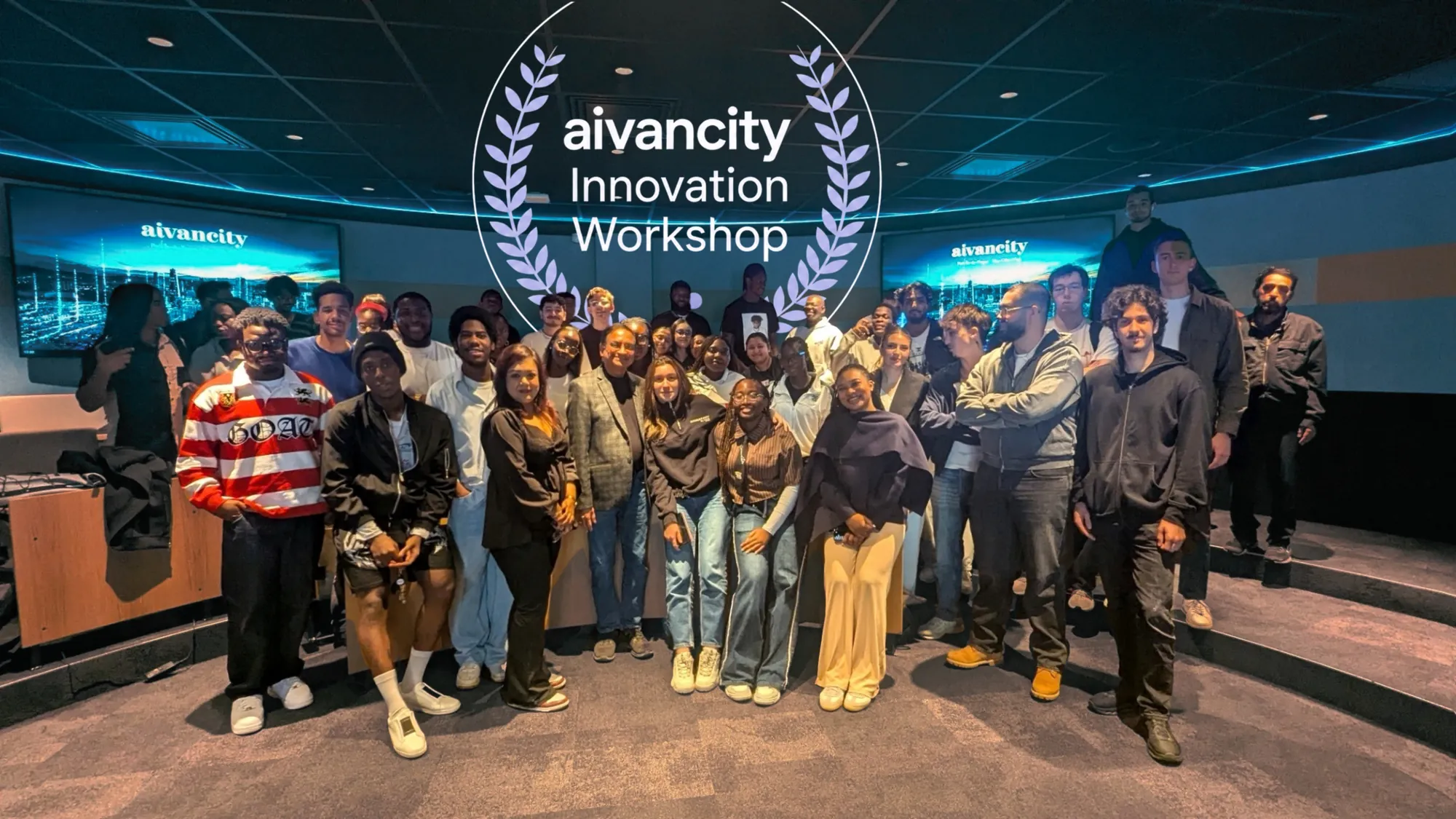

Professor Dhar brings a rare blend of perspectives. He is a professor at SJSU, a senior member of the IEEE, and editor-in-chief of the IJBDCN. His research focuses on AI in education, recommendation systems, trustworthy AI, big data, and smart cities, with work funded by the NSF and projects conducted in collaboration with the City of San José. He also mentors startups and serves on the judging panel for the Silicon Valley Business Plan Competition, making him the ideal guide for a session bridging the gap between academia and entrepreneurship.
The session covered four main areas:
- Silicon Valley's Innovation Ecosystem and How AI Is Changing the Rules of the Game for Startups
- AI in Education, Featuring a Live Demonstration of the myAcademic Agent-Based Platform
- Recommendation Systems in Practice, Followed by a Practice Quiz
- An innovation challenge focused on AI in education, culminating in five-minute team pitches
Silicon Valley: A Network, Not Just a Place
Professor Dhar opened the session with a key point: AI accelerates innovation; ecosystems make it decisive. The numbers show why this moment is important. According to the Stanford HAI 2026 AI Index:
Silicon Valley’s strength rests on six mutually reinforcing ingredients: talent, knowledge, capital, infrastructure, markets, and a culture that tolerates failure. Together, they drive a flywheel. Research fuels startups, startups attract capital, capital enables scaling, and returns are reinvested in new founders. AI accelerates each cycle by reducing the cost of prototyping.
How AI Is Changing the Startup Landscape
Natural language programming, agents, and reusable APIs enable smaller teams to produce a credible prototype and test more hypotheses each month. The downside: new risks, such as model dependency, variable inference costs, and limited differentiation. Sustainable value continues to come from domain expertise, proprietary workflows, trust, distribution, or a genuine data advantage.
The students also explored the AI technology stack where startups compete—from computing and energy at the foundation, through data, models, and orchestration, all the way to vertical applications in education and healthcare. Professor Dhar demonstrated how OpenAI, Google, Anthropic, and NVIDIA each run startup programs that combine access to technology, funding, mentoring, and market connections.
The Founder's Guide
An AI startup always succeeds by better solving a pressing problem. The guide shared with students:
- Start with a workflow: observe the users, the constraints, and the cost of failure.
- Demonstrate the value proposition: deliver a result that is measurably faster, less expensive, or better.
- Designing for Reliability: Through Evaluation, Fact-Based Decision-Making, Permissions, and Escalation to a Human.
- Building a competitive advantage: in the workflow, data, trust, or distribution.
- Scaling up responsibly: by monitoring unit economics, model risk, and customer outcomes.
As one slide summarized, a demo shows what is possible, but a company delivers a reproducible and trustworthy result. Responsible AI, he argued, is not a compliance layer but a component of product-market fit.
Responsible AI is not a compliance layer, but a component of product-market fit.
Prof. Subhankar Dhar
Universities: Active Hubs in the Innovation Network
Where are schools like aivancity located? Professor Dhar’s answer: Universities should not observe the ecosystem from the sidelines, but should be active nodes within it. He described five roles:
- Teaching: combining expertise in AI, in-depth knowledge of a specific field, and entrepreneurial judgment.
- Build: Organize workshops, capstone projects, hackathons, and innovation challenges.
- Translate: Turn research into products through partnerships with industry and startups.
- Governance: Building capacity in evaluation, ethics, and public policy.
- Include: Expand access to tools, mentors, computing power, and networks.
He also discussed concrete forms of academic collaboration between institutions: guest lectures that evolve into joint modules and courses, shared research themes such as trustworthy AI, agent-based AI, and recommendation systems, as well as exchanges of faculty and students through visiting professor positions, internships, and mentoring. The next wave of AI, he noted, is shifting from generic chat to domain-specific applications in sectors such as education, healthcare, and law, where universities’ expertise and credibility are real assets.
AI in Education: A Firsthand Look at myAcademic
The second part of the morning shifted from ecosystems to a specific product. Professor Dhar presented myAcademic, a smart learning platform based on agent-based AI—developed by Professor Dhar—that guides students from a generic learning management system (LMS) to professional success, and demonstrated it live, including AI feedback on a resume with an eye toward career opportunities.
The starting point is simple. Traditional LMS platforms organize learning: gradebooks, content repositories, manual analyses. The next step is to understand, predict, recommend, and take action. myAcademic adds a layer of agent-based AI on top of an institution’s existing LMS rather than replacing it.
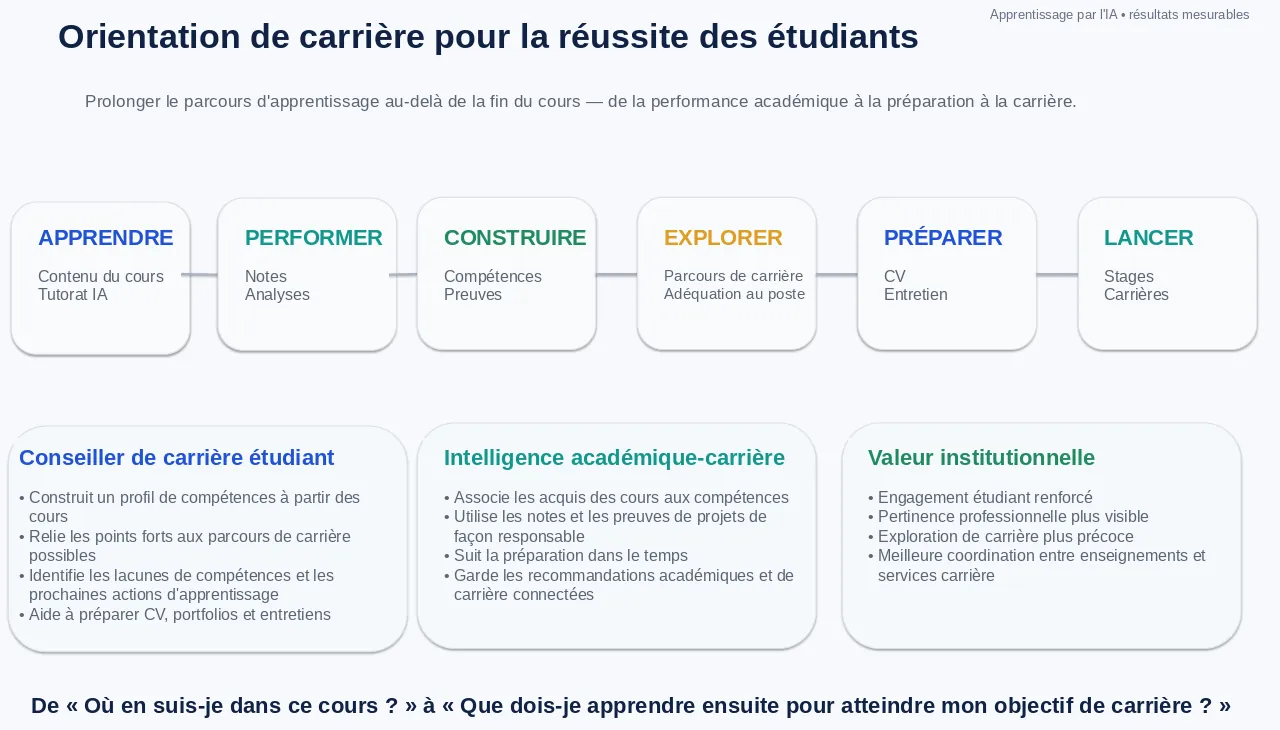
Four Key Components
Two Perspectives, One Loop
For students, the platform transforms grade data into a continuous cycle of success: it synchronizes the latest course data, analyzes gaps, predicts results, recommends actions, and then helps students study and make progress. It answers questions such as “What should I focus on this week for my next exam?” or “Can I turn in my assignment late?” In addition, it allows students to upload their résumés and recommends relevant job openings nearby that match the student’s expertise.
For teachers, AI is involved throughout the entire teaching cycle—from curriculum design to grading, including the identification of students who need support. Crucially, the teacher retains control through human validation (human-in-the-loop), transparent recommendations, and permissions defined by the institution. When a student is flagged, the platform explains why.
From Classes to Careers
The most forward-looking part of the demonstration extended the learning experience beyond the classroom. A career advisor builds a skills profile based on courses, links course content to specific skills, identifies gaps, and recommends courses, projects, and internships. A student might ask, “I want to become a data analyst. Based on my courses and performance, what should I focus on next?”
Safeguards are essential here. Career suggestions remain advisory, transparent, and under the student’s control; they are based on approved academic data, and never infer protected characteristics or make high-stakes decisions on their own.
Student Innovation Challenge
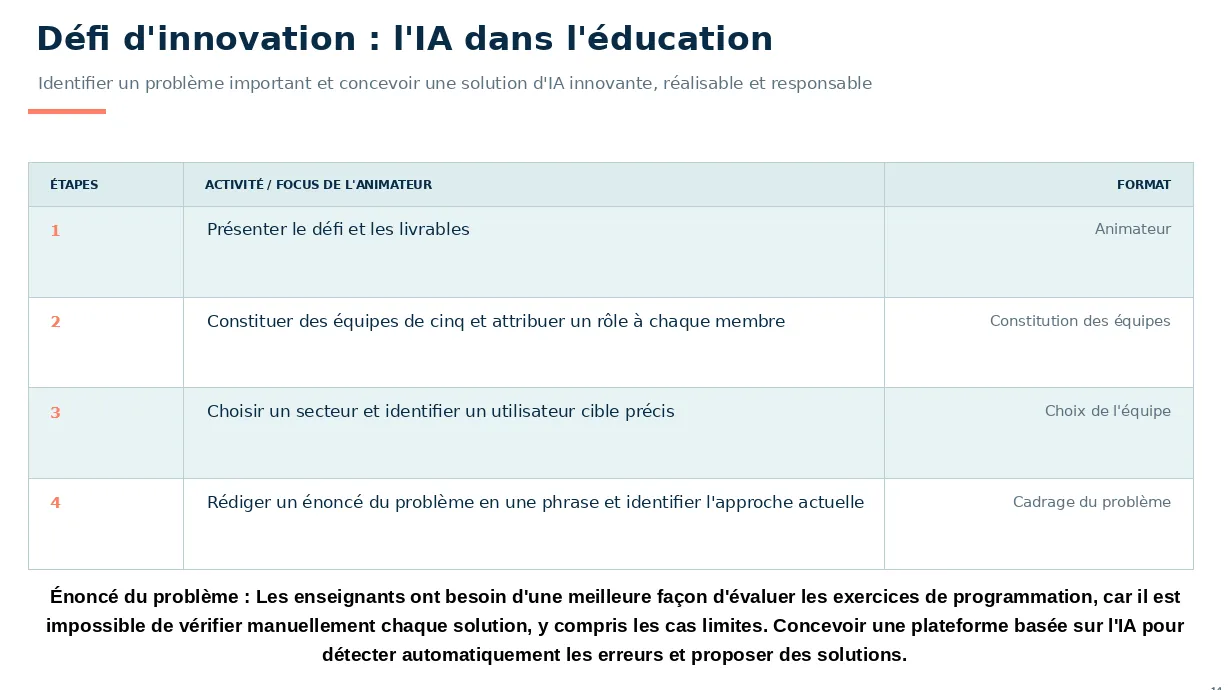
After a session on recommendation systems in practice and a short practice quiz, the students put theory into practice during the AI in Education Innovation Challenge. The topic:
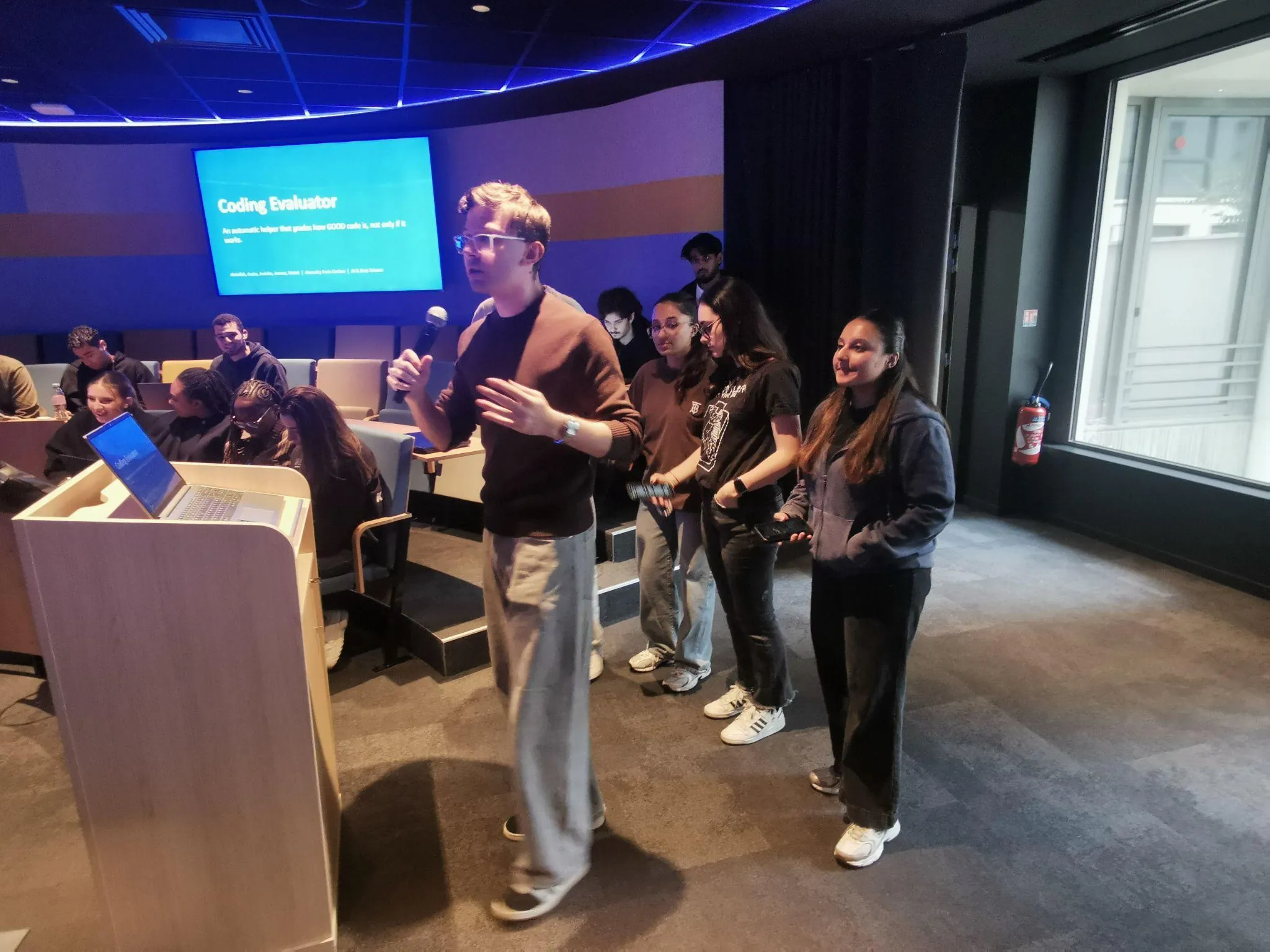
The problem statement described a challenge familiar to every programming teacher. Teachers need a better way to grade programming assignments, since it is impossible to manually check every solution and every edge case. Teams were asked to design an AI-based platform that automatically detects errors and suggests corrections.
Five roles per team
The students formed teams of five, with each member bringing a different perspective to ensure that nothing essential was overlooked:
- Problem Owner: Identifies the target user, their needs, and the limitations of the current approach.
- AI Manager: Proposes the AI task, model, or agent-based approach.
- Data Manager: identifies data needs, quality limitations, and access constraints.
- Responsible AI Officer: assesses privacy, fairness, security, exclusion, and misuse.
- Product and Pitch Manager: shapes the workflow, the value proposition, and the final presentation.
A Ten-Step Framework for Innovation
The teams worked from a framework covering the user, the problem, the current approach, AI capabilities, and data, followed by the workflow, the human role, value, success metrics, and risk. The issue of the human role stood out: in what areas should judgment, consent, or approval remain the responsibility of a person?
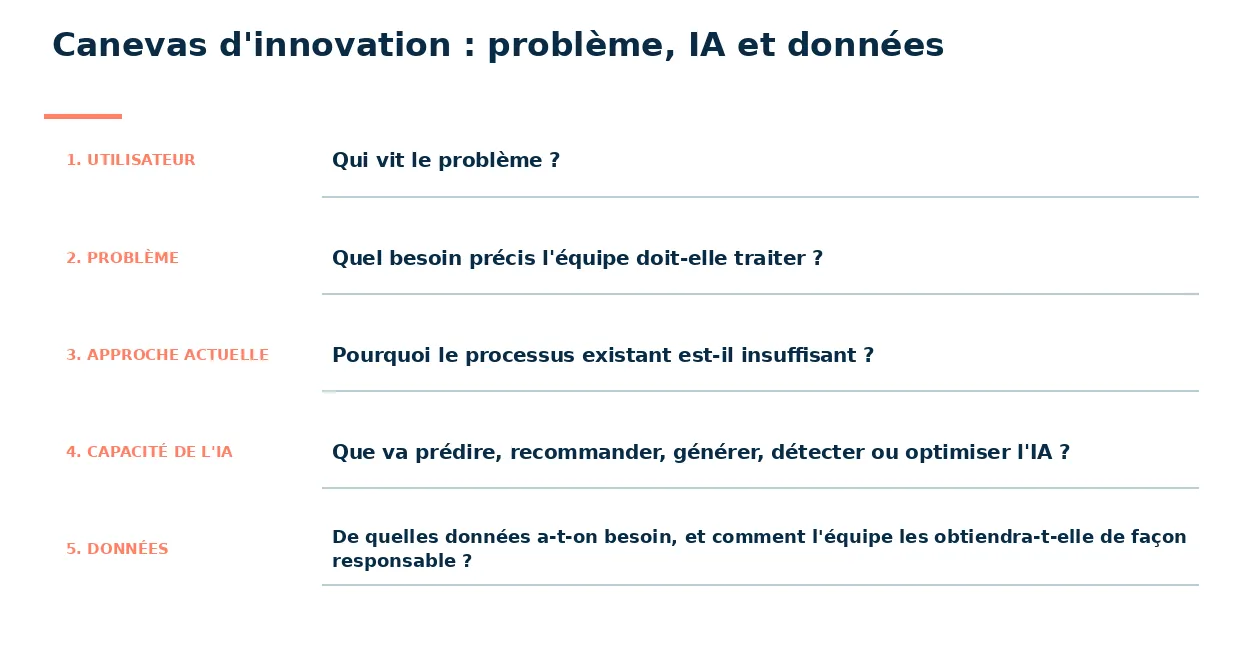
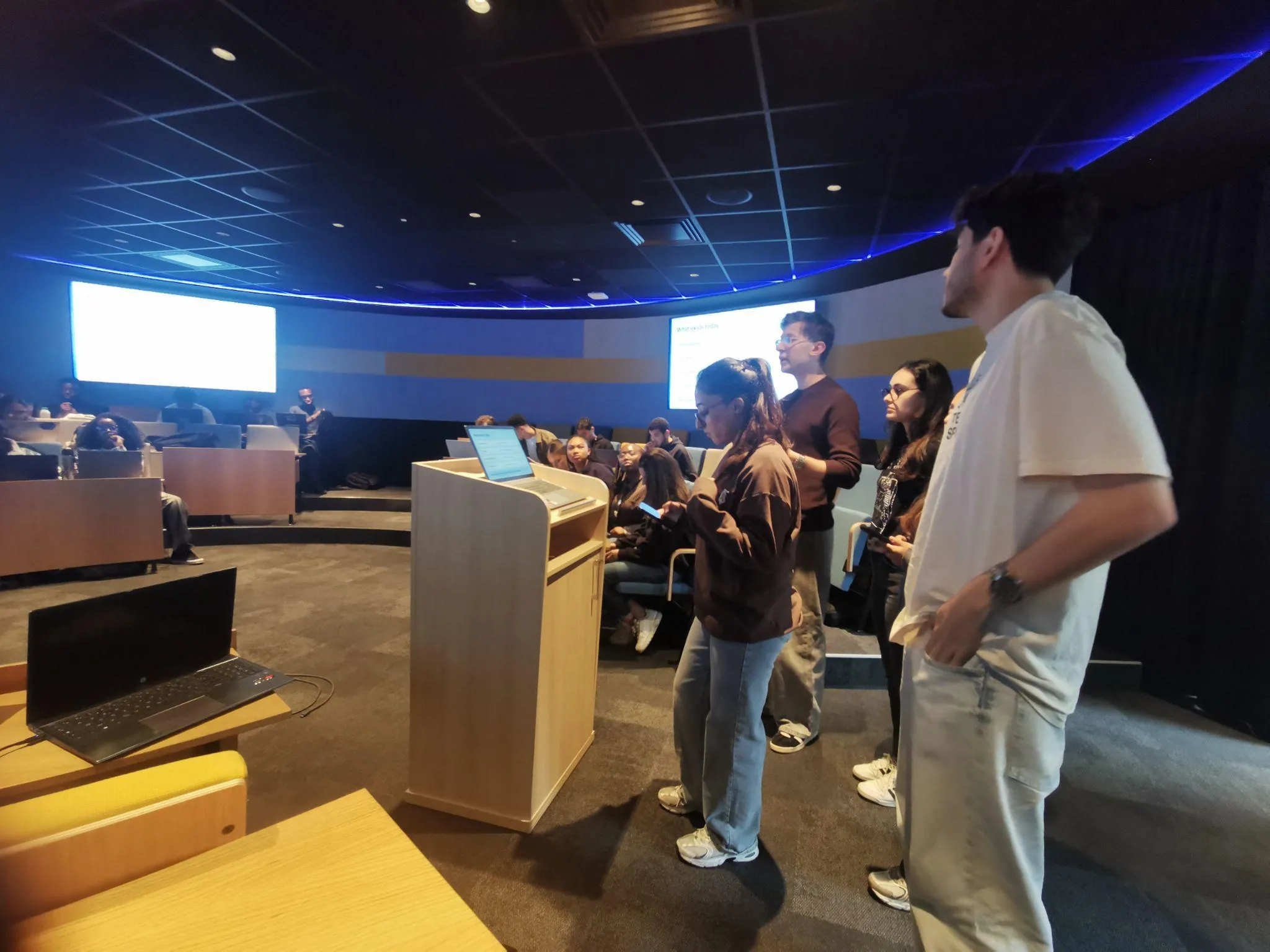
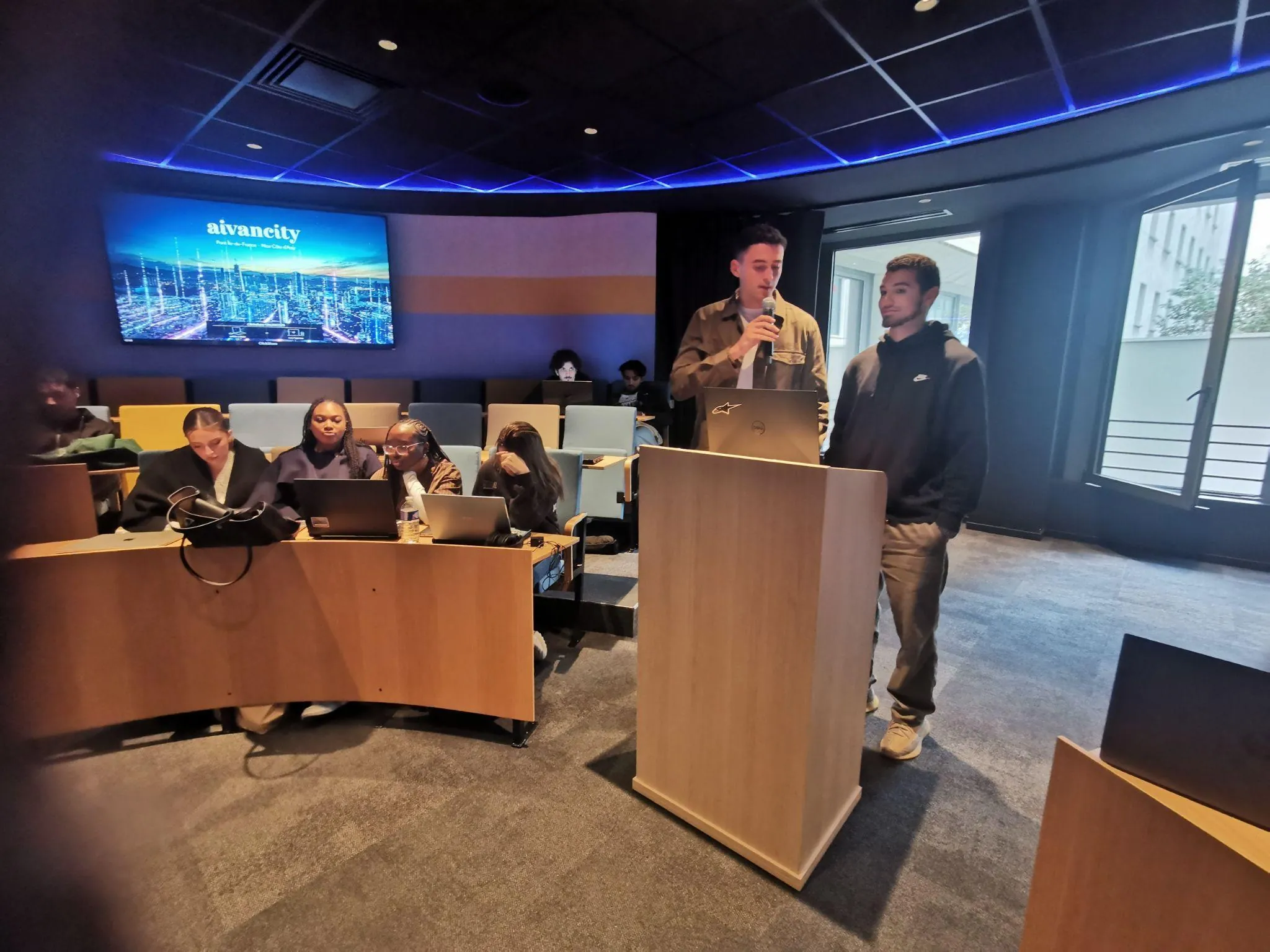
Each team then gave a five-minute pitch using three slides: the problem and why current approaches are insufficient; the AI solution, its data, and its design with humans in the loop; and finally, the benefits, success metrics, risks, and safeguards.
AI accelerates innovation; ecosystems make it essential.
Prof. Subhankar Dhar