
Artificial intelligence continues to emerge as a key driver of transformation for Google’s digital services. Already widely integrated into products like Google Maps, Android, and the search engine, the Gemini AI family is now making its way into the heart of Gmail. In early 2026, the company announced a gradual overhaul of its email service, designed from the ground up around the capabilities of Gemini 3. The goal is clear: to make Gmail much more than just a tool for sending and receiving emails, transforming it into an assistant capable of analyzing, summarizing, and supporting everyday tasks.
AI summaries to understand a conversation at a glance
Among the first announced updates is the introduction of AI-generated summaries directly within Gmail conversations. Already familiar from Google’s search engine, where they provide concise answers to users’ queries, these summaries take on a new form here. When a conversation thread becomes long or complex, Gmail can automatically generate a summary of the key points. This allows users to quickly grasp the content of an exchange without having to scroll through all the messages—a free feature designed to reduce the information overload associated with emails.
Search your emails the way you search Google
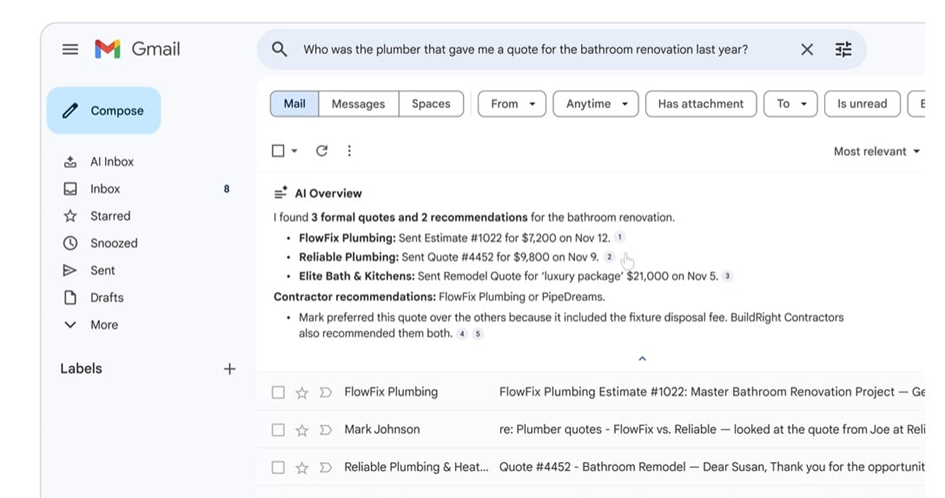
Google is taking things a step further by applying conversational search logic to email. For subscribers to Google AI Pro and Google AI Ultra, Gmail allows users to enter natural-language queries directly into the search bar. Rather than relying on vague keywords, users can ask a complete question, referencing a specific context or a vague memory. The AI then analyzes the conversation history and provides a direct answer, eliminating the need for lengthy manual searches through archives.
Built-in, context-sensitive writing tools
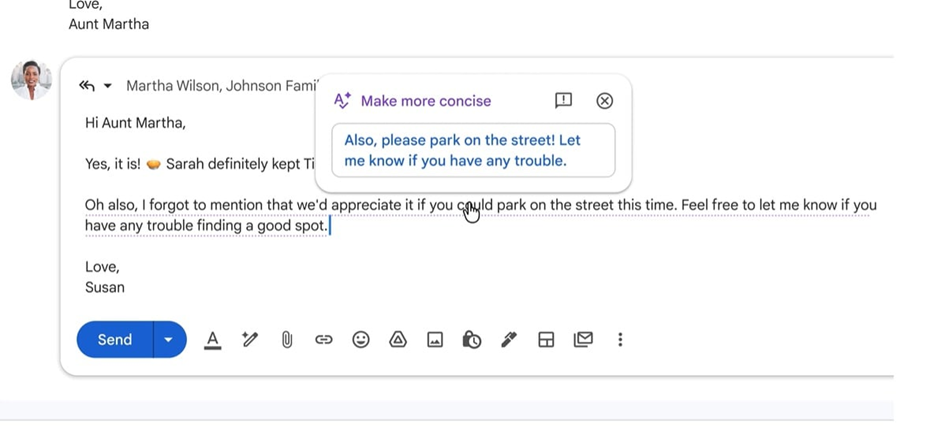
Email composition is another key feature of this redesign. With the "Help Me Write" feature, Gmail integrates writing assistance directly into the interface, eliminating the need to use an external chatbot. The AI can generate a draft based on a simple prompt, as well as analyze the context of an existing conversation to suggest complete and coherent responses. By taking the user’s writing style into account, the suggestions become more personalized and require little editing before sending. These tools, available for free, aim to speed up communication while maintaining consistency in tone.
AI Inbox, an AI-powered inbox
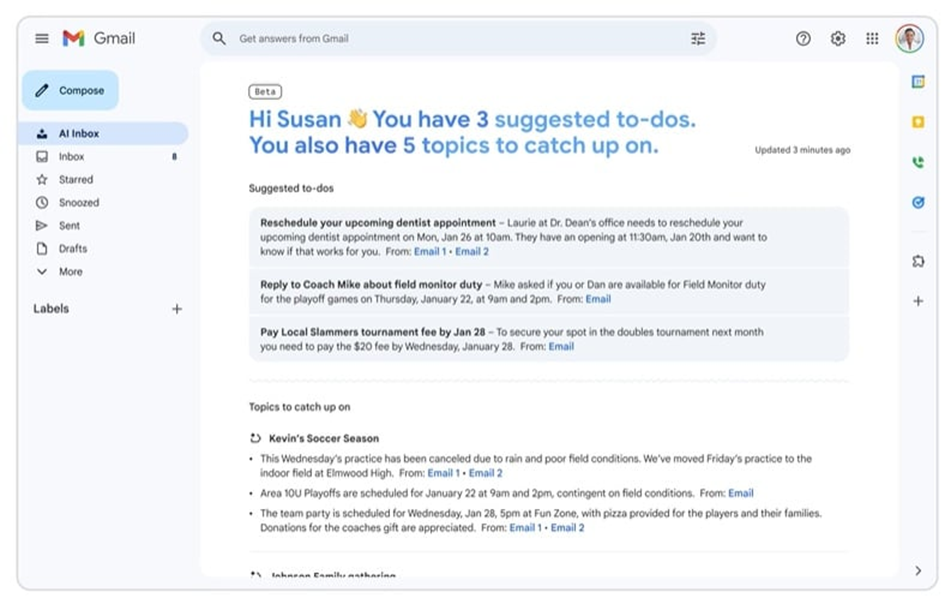
The most significant change, however, concerns the very structure of the inbox. Google is currently testing a feature called AI Inbox, which is set to become a central part of the Gmail experience. Unlike the traditional chronological view, this interface highlights information that the AI deems a priority. Important messages, deadlines, bills, and appointments are grouped together in a summary dashboard. The AI is also capable of generating to-do lists based on email content, giving users a more actionable view of their daily priorities.
Ethical Issues and Limitations of AI-Enhanced Messaging
This transformation of Gmail nevertheless raises important questions. The automated analysis of content that is sometimes personal or professional raises concerns about the privacy of communications and data governance. Even though Google claims to comply with current regulatory frameworks, delegating the reading, summarizing, and prioritization of emails to an AI changes the user’s relationship with their email. Furthermore, increased reliance on AI suggestions—whether regarding responses or the prioritization of information—raises concerns about a loss of control and the potential standardization of usage. These limitations suggest that these tools should be viewed as assistants rather than substitutes for human decision-making.
A gradual rollout that remains limited
At this stage, all of these new features are being rolled out gradually and are currently available primarily to English-speaking users based in the United States. Google has indicated, however, that it plans to expand to other languages and regions in the coming months. This phased approach allows the company to refine the features and test their effectiveness before a wider rollout.
With this redesign, Gmail is fully aligned with Google’s strategy to integrate AI into the heart of everyday use. Email is no longer just about managing messages; it is becoming a smart interactive space capable of helping users understand, organize, and create content, while raising new questions about the balance between automation and autonomy.
Learn more
In the same vein, check out our article “What if AI answered your emails? Perplexity launches its assistant for Gmail and Outlook”, which explores how smart assistants are gradually integrating into email tools to automate drafting, prioritize communications, and transform productivity practices in the workplace.