


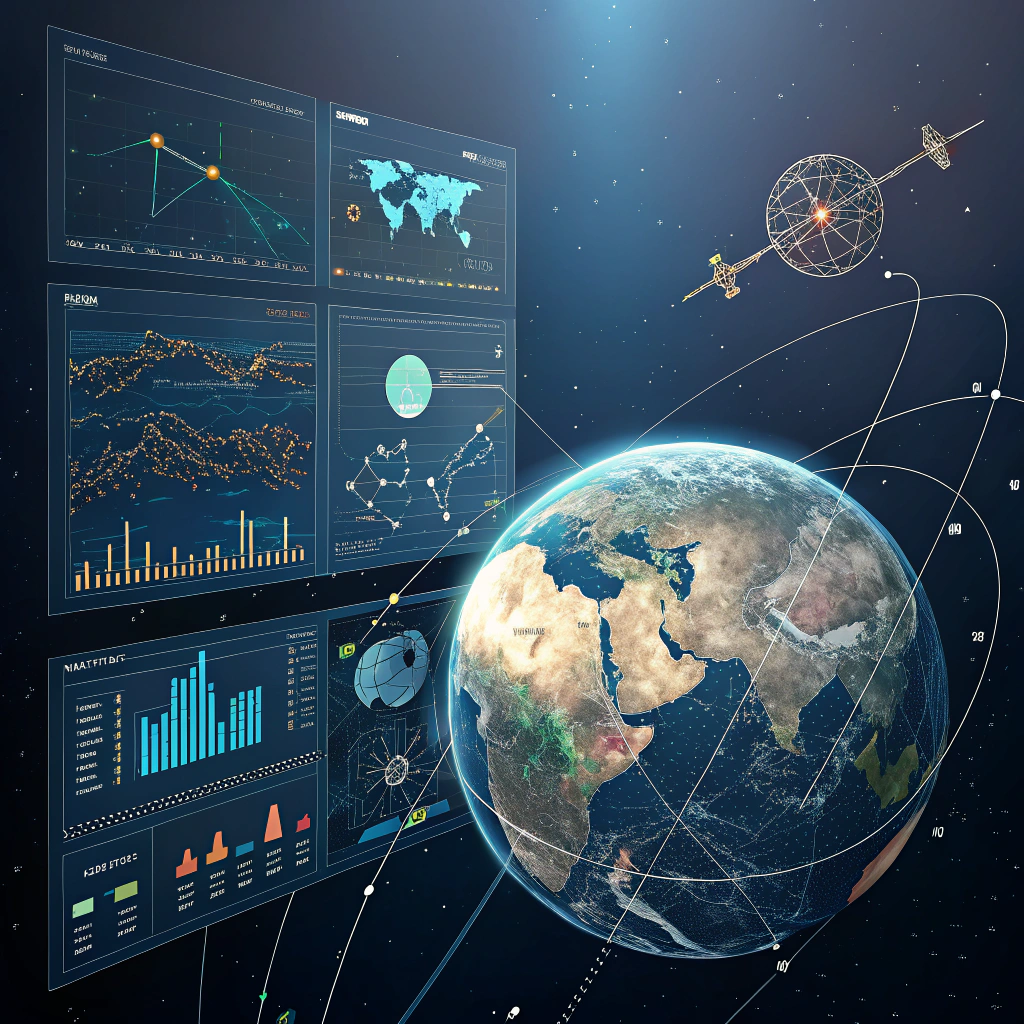
On April 20, 2025, IBM and the European Space Agency (ESA) announced the launch of TerraMind, an open-source Earth observation model designed to revolutionize the analysis of environmental data. This ambitious project aims to provide an advanced solution for monitoring the planet in real time, using Artificial Intelligence (AI) to process geospatial data. Through this initiative, the two tech giants aim to offer a tool accessible to the scientific community, while improving access to Earth data.
An open-source model for greater transparency
TerraMind relies on Earth observation satellites, which collect essential data for monitoring climate change, biodiversity, and natural phenomena. This initiative is part of a broader strategy by IBM and the ESA to make this data openly available to everyone, thereby enabling the scientific community, governments, and nongovernmental organizations to use this information effectively and transparently.
The decision to use open source is a strategic one: it not only facilitates greater international collaboration but also allows for external validation of the algorithms used. This approach helps bring together the world’s leading experts in environmental data analysis.
TerraMind's Applications for Environmental Monitoring
TerraMind is designed to address increasingly pressing global challenges, including natural disaster management, ecosystem conservation, and the fight against climate change. Here are a few examples of practical applications of this model:
- Monitoring deforestation and biodiversity loss: By analyzing satellite imagery, TerraMind can detect areas affected by illegal deforestation or forest fires in real time. According to a report by the Food and Agriculture Organization of the United Nations (FAO), 13 million hectares of forest are lost worldwide each year1.
- Natural Disaster Prediction: The AI integrated into TerraMind is capable of predicting events such as floods, wildfires, and storms by analyzing precipitation and temperature data. Recent floods in Europe have shown that predictive systems could reduce human and economic losses by up to 50% by improving response times2.
- Ocean and pollution monitoring: The model also makes it possible to analyze trends in marine pollution and monitor areas affected by oil spills or plastic pollution. In 2022, marine pollution was estimated at 8 million tons of plastic annually3.
The Power of Artificial Intelligence for Spatial Data Analysis
One of TerraMind’s key strengths lies in its integration of artificial intelligence to process and analyze spatial data on a large scale. The system is capable of classifying satellite images, identifying objects of interest, and extracting relevant information from complex datasets.
Using deep learning models, TerraMind can perform accurate analyses of urban growth, natural resource management, and the impacts of climate change on specific ecosystems. IBM leverages its AI capabilities—including natural language processing and image recognition algorithms—to improve the accuracy and speed of these analyses.
A tool for the global scientific community
One of TerraMind’s key objectives is to facilitate access to geospatial and environmental data. The implementation of an open-source model ensures complete transparency and enables knowledge sharing on a global scale. Researchers, academics, and businesses around the world will be able to adapt the model to their specific needs and use it for their local projects.
For its part, ESA sees TerraMind as a way to strengthen international cooperation in the field of Earth observation. The Agency aims to make this model a global benchmark for the analysis of space data, thereby contributing to the establishment of a global environmental monitoring system.
A response to global challenges
The launch of TerraMind comes at a time when environmental and sustainability issues are becoming increasingly pressing. In 2024, global CO2 emissions reached record levels, and the climate emergency is now a top priority for governments around the world. Real-time monitoring of environmental changes is essential to addressing these challenges.
The TerraMind model can help improve environmental risk management by providing reliable, up-to-date data, enabling more informed and effective decision-making. The project also demonstrates IBM’s and ESA’s commitment to strengthening their leadership in technological innovation for the benefit of the planet.
An innovative model for sustainable monitoring
The launch of TerraMind by IBM and the ESA represents a major breakthrough in the field of Earth observation. By combining artificial intelligence with an open-source approach, this model offers invaluable potential for large-scale environmental monitoring. It not only enables us to better understand and anticipate natural phenomena, but also to respond more accurately and quickly to the challenges posed by climate change. By putting technology to work for sustainability, TerraMind illustrates the central role that AI and international collaboration will play in managing our planet in the future.
References
1. FAO. (2023). State of the World’s Forests 2023.
https://www.fao.org/state-of-the-forests
2. European Commission. (2024). Flood Prevention and Disaster Risk Management.
https://ec.europa.eu/environment/risks/floods
3. United Nations. (2023). The State of the Ocean.
https://www.un.org/environment/oceans