


By Dr. Tawhid CHTIOUI, Founding President of aivancity, the leading school for AI and data
It is often said that artificial intelligence will eventually surpass us—that it analyzes better, makes decisions faster, and learns tirelessly. But what if what we call “intelligence” is actually just a fragment, and the essence of it eludes machines?
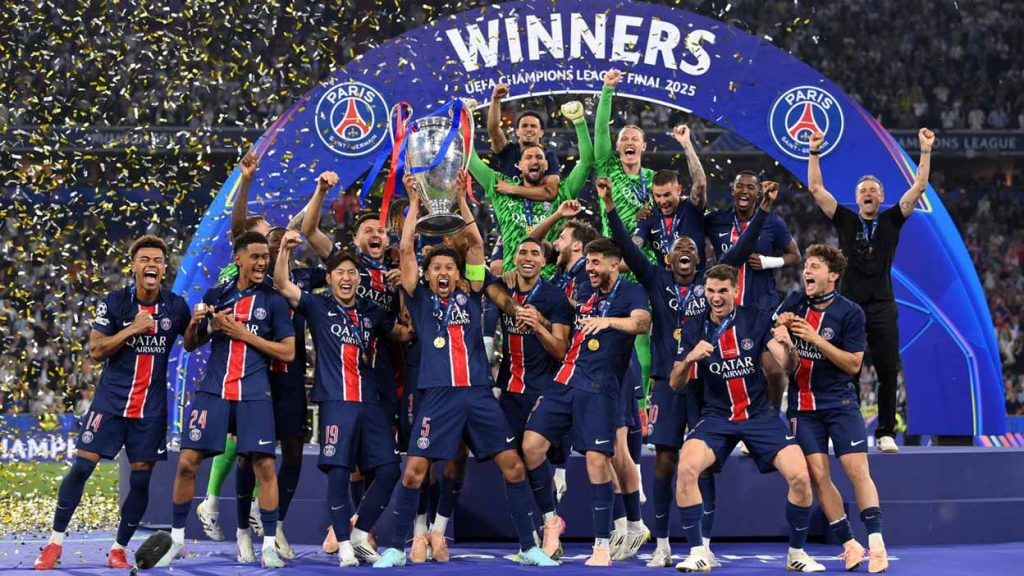
In a world captivated by algorithmic feats, where performance is measured by computational speed and predictive power, an unexpected event serves as a reminder of what AI still cannot do. On May 31, 2025, Paris Saint-Germain made history by winning the Champions League for the first time. A resounding 5-0 victory over Inter Milan. A match that the statistics suggested would be closer, but which the field turned into a masterclass.
Since the publication of the McKinsey report (2017) on the prospects for job automation, or the MIT-IBM Watson AI Lab report (2023) on the future of human-machine collaboration, one thing has become clear: AI excels at certain well-defined cognitive functions, particularly data analysis, pattern recognition, and algorithmic optimization. In other words, it is powerful whereanalytical intelligence prevails—a concept that Robert Sternberg identifies as one of the three major forms of intelligence in his triarchic theory (1985). However, while analytical intelligence can be harnessed by machines, the others—emotional, collective, situational, and relational—remain profoundly human.
PSG’s journey under Luis Enrique is not merely an example of athletic performance. It embodies a subtle orchestration of human skills that cannot be reduced to an algorithm: the ability to feel and channel emotions under pressure, to build trust within a team, to adapt tactically to changing circumstances, to innovate on the field, and to intuitively understand others. It is this interweaving of multiple intelligences—as defined by Howard Gardner in his seminal theory (1983)—that has enabled excellence. And this is also what our society sometimes forgets, obsessed as it is with the rise of language and decision-making models.
In a world captivated by AI, perhaps it is time to remember that human intelligence is neither unique nor uniformly reproducible. Using PSG’s victory as a starting point, this article explores five fundamental forms of intelligence, demonstrating why—and how—they remain our decisive advantage in the age of artificial intelligence.
1. Collective intelligence: when “we” trumps “I”
What stands out most about Luis Enrique’s PSG is how he has transformed a collection of brilliant individuals into a cohesive, united, almost organic unit. In a sport where isolated feats are often celebrated, this team has chosen a different path: that of collective intelligence. It is not simply a matter of playing together, but of thinking together, of anticipating each other’s intentions without speaking, of building fluid movements where everyone knows how to blend into the shared rhythm. A form of emergent intelligence, which researchers like Pierre Lévy describe as the group’s ability to generate meaning and solve complex problems, beyond the sum of individual skills.
This PSG team didn’t just assemble a roster of talented players. It connected them within a system where passing, movement, and defensive coverage are all expressions of a shared vision. We saw this against Manchester City, when the team’s collective press, triggered at just the right moment, neutralized the opponent’s possession-based play. Or in the final, when the interplay between midfielders and forwards opened up gaps invisible to the naked eye but perfectly anticipated by the players. None of this can be replicated by a machine. Because collective intelligence requires trust, real-time adaptation, and shared experience. It is based on human connection, not lines of code.
Another striking example of this collective intelligence isOusmane Dembélé’s performance in the final. Despite being a favorite for the Ballon d’Or, Dembélé set aside his personal ambitions to devote himself entirely to the team. His relentless pressing and two assists were instrumental in PSG’s victory, perfectly illustrating his commitment to the team.
2. Emotional intelligence: channeling emotions to transcend the collective
While collective intelligence weaves the fabric of the game, emotional intelligence is its invisible driving force. It enables players to navigate the turbulent waters of emotion, transform stress into constructive energy, and maintain mental clarity under pressure. Daniel Goleman, who popularized the concept, describes it as the ability to recognize, understand, and manage one’s own emotions, as well as those of others, to guide thought and action.
Captain Marquinhos embodied this emotional intelligence. On the eve of the final against Inter Milan, he expressed his deep connection to the team, declaring, “I’m in love with this team.” This statement reflects not only his attachment to the group, but also his ability to instill positive energy and collective confidence. During the match, his exemplary conduct served as an emotional anchor for his teammates. His composure and determination helped the team stay focused, even in moments of tension. After the victory, Marquinhos spared a thought for his former teammates who had failed to win the Champions League, stating: “I think of all the players who have been here and who didn’t succeed.” This gesture of humility and gratitude underscores his ability to manage his emotions while honoring the club’s collective history.
Unlike artificial intelligence, which can analyze data and predict behavior, emotional intelligence is rooted in lived experiences, human interactions, and deep self-awareness. It cannot be programmed; it must be cultivated. In a world where machines are becoming increasingly capable of analysis, emotional intelligence remains an irreplaceable human skill, essential to both individual and collective performance.
3. Situational intelligence: adapting to gain the upper hand
Situational intelligence is the ability to perceive the dynamics of a constantly changing environment and adjust one’s behavior accordingly. In the context of soccer, it manifests itself in a team’s ability to adapt its strategy based on the circumstances of the game, the opponent’s strengths and weaknesses, and unexpected developments on the field.
In the final, PSG demonstrated remarkable situational awareness. The Parisians were able to vary their play, alternating between high pressing and periods of patient possession, exploiting the spaces left open by their opponents. This adaptability was made possible by a keen reading of the game and constant communication among the players, allowing for real-time tactical adjustments.
A striking example of this situational awareness is the performance of Désiré Doué, a 19-year-old attacking midfielder. Starting the match to everyone’s surprise, he quickly adapted to the demands of the game, exploiting open spaces and adjusting his positioning in response to the opponents’ movements. His ability to read the game and make informed decisions in real time was instrumental in PSG’s dominance during the final.
This ability to adapt, which stems from collective experience and an intuitive understanding of the game, is difficult for artificial intelligence to replicate. It relies on sensory perceptions, emotions, and situational awareness that machines cannot reproduce. Thus, situational intelligence remains an essential human skill, particularly in complex and unpredictable environments such as elite sports.
4. Creative intelligence: innovating to surprise
Creative intelligence is the ability to generate new ideas, to break away from established patterns, and to propose novel solutions. In soccer, it manifests itself in innovative strategies, unexpected plays, and tactical adjustments that throw the opponent off balance.
In the final, coach Luis Enrique demonstrated remarkable tactical ingenuity. Facing an Inter Milan side known for its defensive solidity, he devised a bold game plan that highlighted his players’ versatility and exploited the opponent’s weaknesses. This approach allowed PSG to dominate the match from start to finish.
A striking example of this tactical creativity is the useof Achraf Hakimi in a hybrid role, shifting between his duties as a right back and making runs into more central areas. This flexibility threw Inter’s defense off balance, creating spaces that the attacking midfielders were able to exploit.
This ability to innovate and come up with original solutions on the fly is difficult for artificial intelligence to replicate. It relies on intuition, experience, and a deep understanding of the game. As a result, creative intelligence remains an essential human skill, particularly in competitive environments where innovation makes all the difference.
5. Emotional intelligence: building connections to foster unity
Emotional intelligence is the ability to build authentic relationships, understand interpersonal dynamics, and create an environment conducive to collaboration. In the context of soccer, it manifests itself in a club’s ability to unite all its members, foster a culture of trust, and value each individual within the team.
During the final, Paris Saint-Germain demonstrated remarkable interpersonal skills. Beyond their performance on the field, the club successfully rallied all its stakeholders around a common goal. A striking example of this relational intelligence is the club’s initiative to invite all its employees to attend the final in Munich. This move underscores PSG’s commitment to strengthening ties among all parts of the club, from players to staff members and administrative employees.
This team spirit was also evident on the field. Substitutes, such as Senny Mayulu, who came on late in the game, fit right in and contributed to the team’s success by scoring the fifth goal of the match. This performance speaks to the strong bonds formed among the players, fostering a team dynamic where everyone feels valued and ready to give their best.
This ability to build genuine connections, understand everyone’s needs, and foster a harmonious work environment is difficult for artificial intelligence to replicate. It is based onempathy,active listening, and a deep understanding of human relationships. As a result, interpersonal intelligence remains an essential human skill, particularly in environments where collaboration and trust are paramount.
What if the real challenge isn't AI, but the fact that we've forgotten our own intelligence?
By constantly proclaiming that artificial intelligence will surpass us, we end up neglecting to nurture the qualities that truly make us human. Soccer, a sport of skill and instinct, reminds us that human genius cannot be reduced to mere calculations. That excellence does not stem from an algorithm, but from the interaction between people capableof intuition,improvisation, and trust.
PSG 2025 is living proof of this. This team performed well not because of data or a rigid tactical scheme, but because it was able to harness a whole spectrum of deeply human intelligence. They thought together, felt together, adjusted in real time, innovated, and communicated. What machines sometimes reproduce mechanically, these players embodied in the warmth of reality—through their skin, their gazes, their silence, and their gestures.
In a world obsessed with technical performance, this sporting victory tells us something else: the future does not hinge on the rivalry between humans and machines, but on our ability to focus on what AI lacks—and will always lack.
Reinventing School Before It’s Too Late
The real challenge isn’t teaching children to code before the age of ten, but preparing them for everything that machines won’t be able to do. Learning to cooperate without ego, to listen without judging, to feel without losing oneself. To read a situation, devise a solution, and find meaning in ambiguity. To cultivate nuance, attentiveness, and doubt. These are the vital skills of the 21st century.
And yet, our educational systems continue to prioritize rote learning, linear thinking, and cutthroat competition. As if tomorrow’s world could be mastered using yesterday’s formulas. It is time to reinvent school as a playground for multiple intelligences. A school that does not merely train good followers, but one that nurtures flexible, critical, and creative minds capable of living and acting in an uncertain world.
PSG’s victory should not be confined to the club’s trophy cases. It should resonate in classrooms, in government offices, and in educational programs. It is a call to rethink what learning means—to finally recognize that human intelligence, in all its diversity, is not just another resource. It is the source.
References
• Gardner, H. (1983). Frames of Mind: The Theory of Multiple Intelligences. New York, NY: Basic Books.
• Sternberg, R. J. (1985). Beyond IQ: A Triarchic Theory of Human Intelligence. New York, NY: Cambridge University Press.
• Goleman, D. (1995). Emotional Intelligence: Why It Can Matter More Than IQ. New York, NY: Bantam Books.
• Lévy, P. (1994). Collective Intelligence: Toward an Anthropology of Cyberspace. Paris, France: La Découverte.
• Morin, E. (1999). The Seven Complex Lessons in Education for the Future. Paris, France: Seuil.