


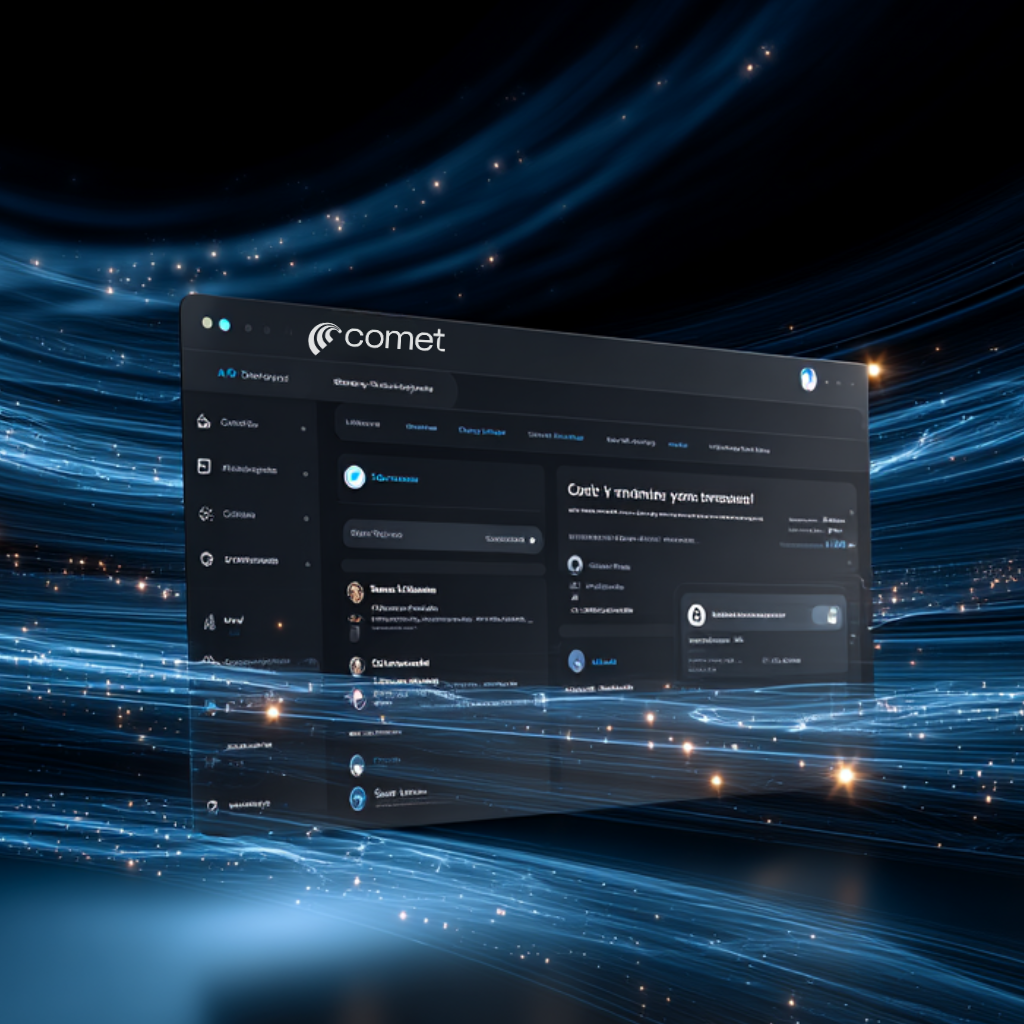
Perplexity reaches a milestone with Comet: artificial intelligence at the heart of navigation
In July 2025, Perplexity AI, known for its conversational response engine, announced the launch of Comet, an AI-powered web browser1. This new tool marks a major evolution in access to information: it integrates generative AI directly into the browsing interface.
Comet positions itself as an alternative to traditional search engines and existing conversational AI systems. It combines the summarization capabilities of an AI assistant with active browsing of reliable, cited sources, in line with the commitment to transparency that Perplexity values.
Navigation redesigned using artificial intelligence
With Comet, Perplexity is transforming the way we interact with the web:
- Users can enter their queries in natural language,
- AI provides targeted summaries of web pages,
- The answers are cited, and the original links are displayed,
- The conversation thread remains active, allowing for successive contextualized searches,
- The interface combines free browsing, guided reading, and suggestions for further reading.
The browser is powered by several language models, including GPT-4o, Claude 3.5, and a proprietary engine, which are combined to enhance the relevance of the results2.
Technology designed for verifiability and transparency
Comet remains true to Perplexity’s mission : to make AI traceable, controllable, and verifiable. Unlike some chatbots that respond without citing their sources, Comet displays:
- the documents used to generate a response,
- the publication dates of the sources,
- direct links to the content viewed,
- a reliability indicator based on the type of site (institutional, academic, media, etc.).
This transparency allows users to verify, cross-check, or challenge the statements generated by the AI.
How can Comet be used in education, research, or business?
Comet is designed for a wide range of advanced applications:
- Students and teachers: literature reviews, preparing summaries, quickly grasping complex content,
- Researchers and analysts: cross-referencing sources, industry monitoring, formulating hypotheses,
- For professionals: writing assistance, strategy, report summaries, knowledge management,
- Journalists: quickly verifying information and providing context for current events.
This is a cognitive assistant designed for navigation, optimized to save time and provide in-depth analysis3.
The limitations and challenges of this smart browser
Despite its promise, Comet is not without its challenges:
- Hallucinations: even when properly cited, a summary may be inaccurate or incorrect,
- Biased selection of sources: the neutrality of the search engine depends on the weighting criteria,
- Privacy: The queries entered may contain sensitive information,
- Web compatibility: Some pages or dynamic content still cannot be automatically analyzed.
These limitations serve as a reminder that AI should not replace critical thinking, but rather serve as a tool to enhance it.
What ethical issues does an AI-powered browser raise?
The emergence of a conversational browser like Comet raises several major ethical questions:
- Algorithmic transparency: Do users understand how AI ranks results?
- Pluralism and diversity: Does Comet present a variety of viewpoints, or does it standardize access to information?
- Consent and personal data: What happens to sensitive requests processed by AI?
- Liability: In the event of an error or misuse, who is liable: Perplexity, the models used, or the end user?
- Cognitive autonomy: Can the convenience offered by AI reduce the exercise of individual judgment?
These challenges underscore the importance of managing the interface as well as the intelligence that powers it4.
Toward a new generation of AI browsers?
Comet represents a major shift:the native integration of AI into web browsing tools. Browsing is no longer passive, but rather guided, annotated, and assisted. The user becomes a co-browser alongside an AI that suggests, rephrases, and guides.
This shift raises a fundamental question: do we want to retain control over our navigation, or delegate it to artificial intelligence?
The answer will depend on the ability of publishers like Perplexity to strike a balance between technological performance and informational responsibility.
References
1. Perplexity AI. (2025). Introducing Comet: An AI-Native Browser.
https://www.perplexity.ai/blog/comet
2. TechCrunch. (2025). Perplexity launches Comet to compete with OpenAI’s web ambitions.
https://techcrunch.com/
3. MIT Technology Review. (2024). The rise of cognitive browsing tools.
https://www.technologyreview.com/
4. European Commission. (2024). AI and Transparency in Web Interfaces.
https://digital-strategy.ec.europa.eu