


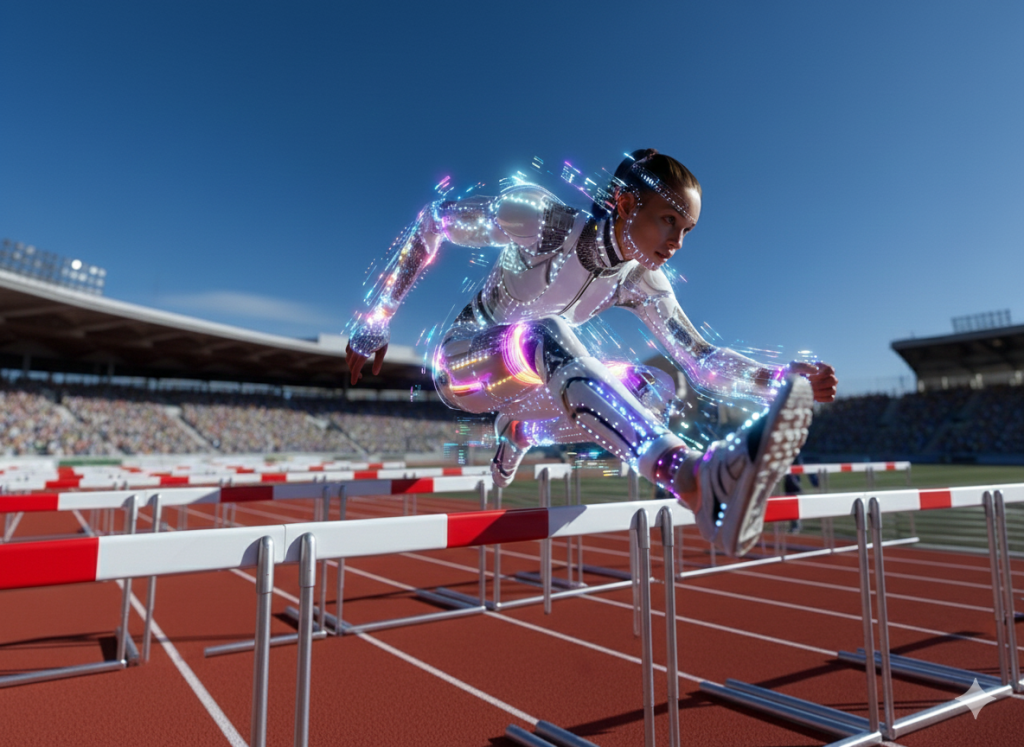
Sports training is undergoing a quiet but profound transformation. While smartwatches and heart rate monitors seemed to have already pushed biomechanical analysis to its limits, a new generation of smart clothing is changing the game. Lighter, more flexible, and closer to the body, these garments weave artificial intelligence into the very fabric itself. Research teams have developed smart sportswear incorporating graphene sensors printed directly onto the fabric, capable of simultaneously measuring posture, respiratory coordination, and the symmetry of muscular effort. All without hindering movement, without visible wiring, and without mechanical constraints. For the first time, movement analysis no longer limits itself to observing the exterior; it delves into the intimate synchronization between breathing, muscle tension, and body stability—that is, the biomechanical foundations that determine performance and injury prevention1.
A fabric that senses movement thanks to flexible sensors
This smartwear is based on a key technology: stretchable, graphene-based printed sensors capable of detecting minute variations in stretching, contraction, or pressure—where rigid sensors lose their sensitivity. The garment continuously records muscle symmetry, range of motion, and respiratory fluctuations, then transmits this data to a miniature electronic module. Together, they form a discreet ecosystem where the sensors become a second technological skin. The engineers explain that this fabric can detect not only a poorly executed movement, but also the warning signs of asymmetrical muscle load, poorly synchronized breathing, or excessive strain on one side of the body. The promise is simple yet revolutionary: to support the athlete where even expert human eyes cannot see.
Deep learning at the heart of the garment to decode movement
The garment does more than just collect data; it interprets it. The data is processed by a deep learning model inspired by ResNet 18, adapted into a one-dimensional version to analyze complex time series. The system achieves a classification accuracy of 92.1% across six types of movements tested, including respiratory abnormalities, muscular imbalances, and technical irregularities2. For the researchers, this accuracy is not merely an indicator of algorithmic performance; above all, it demonstrates that the neural network has learned to recognize biomechanical micro-variations imperceptible to a human coach. The use of t-SNE and GradCAM visualizations confirms that the network’s activation zones actually correspond to the body segments involved in the effort, providing an essential layer of interpretability in a field where transparency is becoming critical. AI does not guess; it observes, connects, and justifies.
A tool designed to correct, optimize, and protect
This smartwear opens up new possibilities for coaches, physical therapists, and elite athletes. Thanks to real-time analysis, it can provide immediate feedback on technical quality and coordination, for example by displaying alerts on the mobile app such as:
• Desynchronized breathing during a squat,
• Asymmetric muscle activation exceeding a critical threshold,
• Poor postural alignment during explosive phases,
• Internal load deemed excessive based on the individual’s profile.
For high-repetition sports such as weightlifting, running, or tennis, this information becomes crucial. It helps identify patterns of fatigue, adjust training loads, correct persistent flaws, and prevent a wide range of injuries related to technique or overuse. The goal is no longer just to improve performance, but to extend athletic longevity by anticipating risks.
Toward a new approach to education, where clothing becomes a coach
For amateur athletes, the garment serves as both an educational and reassuring aid. It makes the invisible visible. Whereas an athlete might have trained for years with poor breathing coordination, AI immediately flags the issue. Where muscle imbalances used to only become apparent following an injury, they are now detected at the very first signs. This augmented learning approach could transform how technical movements are learned, thanks to a continuous cycle of observation, interpretation, and correction. In medical and rehabilitation centers, these textiles open a new path toward personalized protocols based on objective measurements rather than just subjective feelings.
A promising future, but one that requires vigilance and ethical standards
Like any technology that comes into close contact with the body, this smartwear raises important questions. The data collected directly concerns the body, its functioning, its vulnerabilities, and its irregularities. Its storage and processing must therefore meet strict requirements regarding transparency, consent, security, and limitations on use. Researchers emphasize the need for human oversight to interpret certain signals and to prevent AI from becoming an authoritarian prescriber rather than a supportive tool. Sports ethics experts highlight several potential risks:
• Misinterpretations if the model is poorly calibrated,
• Increased pressure on athletes to conform to an invisible standard,
• Excessive collection of sensitive biometric data,
• Technological dependence during learning processes.
Strong governance is essential to maintaining a healthy balance between technology, performance, and athlete autonomy3.
When AI Reveals the Inner Workings of a Gesture
This smart sportswear marks a milestone in the convergence of technology and biomechanics. By revealing the inner mechanics of athletic movement and simultaneously analyzing breathing, exertion, and muscle symmetry, it paves the way for a new form of body awareness—one that is more precise, more responsive, and more deeply personalized. As textiles become smart and AI becomes an integral part of the athlete’s experience, physical training is shifting toward a predictive, preventive, and highly personalized approach. Sports are becoming a field of exploration where the body and algorithms engage in continuous dialogue, with the goal of protecting, guiding, and enhancing human performance.
Learn more
To explore another way in which artificial intelligence is reshaping sports, check out our article on the emotional dynamics of players analyzed by AI: AI observes what cameras miss—the psychological profile of players
References
1. Chen. (2024). Graphene-Based Wearable Sensors for Biomechanical Monitoring.
https://www.sportstechjournal.org
2. Alvarez. (2025). Deep Learning for Real-Time Assessment of Exercise Execution.
https://www.ai-fitness-lab.com
3. International Sports Ethics Forum. (2024). Guidelines for Biometric Data in AI-Assisted Training Systems.
https://www.isef.org