


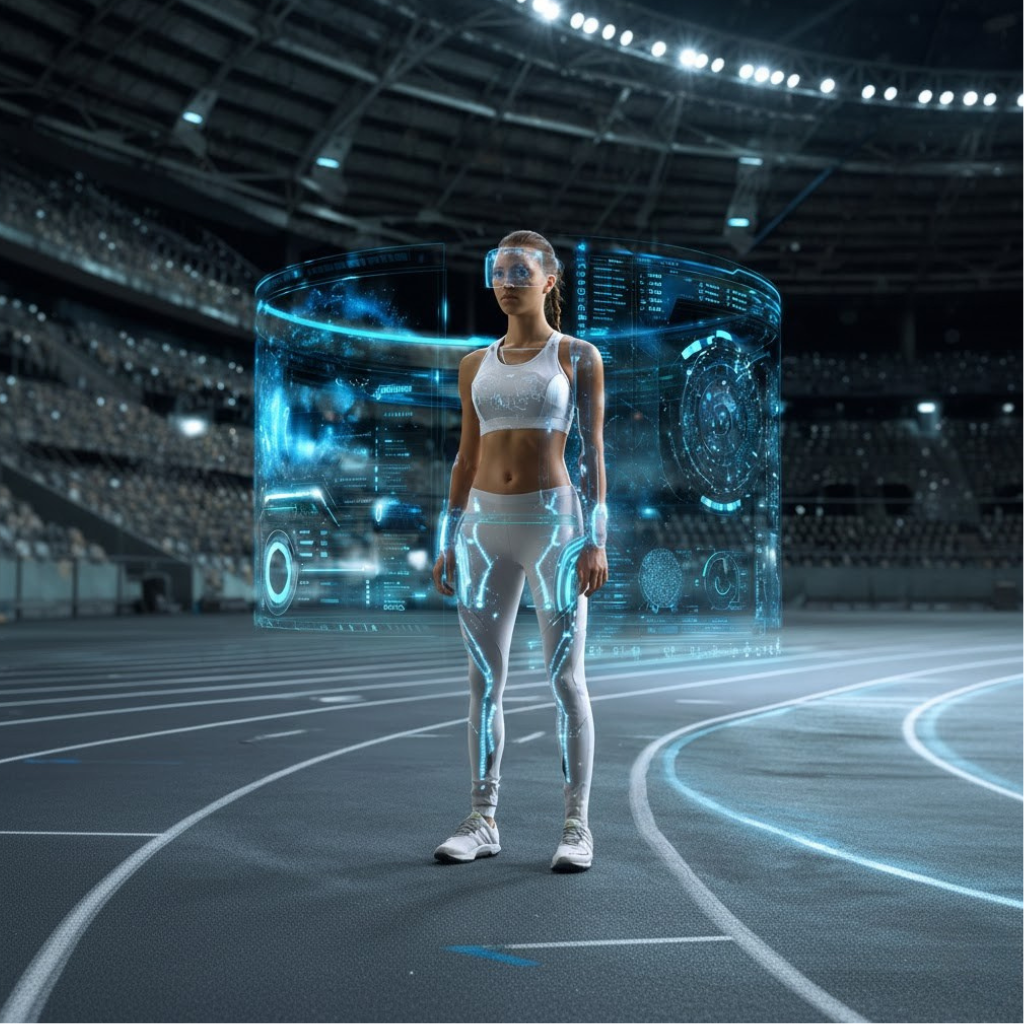
Sports coaching is currently undergoing a profound transformation. Thanks to biometric sensors, smartwatches, and artificial intelligence models capable of interpreting movements in real time, everyone can now benefit from technical monitoring that was once reserved for elite athletes. This evolution is driven by the convergence of several technologies: AI-enhanced video analysis, automated posture recognition, sensors that measure physical load, and systems capable of instantly adapting a training program. According to Allied Market Research, the global market for sports wearables is expected to exceed $156 billion by 2030, driven by widespread adoption among runners, triathletes, cyclists, and fitness enthusiasts. AI is thus becoming a true personal coach, capable of supporting the athlete through every phase of their training.
Sensors that are increasingly powerful, capable of detecting every movement
The effectiveness of AI coaching depends on the richness of the data collected. Smartwatches analyze heart rate, tissue oxygenation, heart rate variability, and recovery levels. IMU inertial sensors attached to the legs or built into shoes measure vertical oscillation, pronation, and ground impact with sub-millimeter precision. Smart insoles detect force distribution with each stride, and high-frequency cameras capture thousands of images per minute to analyze movement technique.
This data enables AI to identify subtle signs that may indicate overexertion or biomechanical imbalance. Garmin estimates that its sensors collect more than 200 data points per second, while Whoop analyzes more than 100 during sleep alone. These volumes of data provide a highly detailed understanding of the human body and its daily physical condition.
AI analyzes biomechanics like a movement expert
Artificial intelligence plays a key role here. The models interpret data in real time, just as an experienced coach would. For a runner, AI analyzes stride rate, stride symmetry, foot strike, pelvic stability, ground contact time, and trunk verticality. For strength trainers, it analyzes the angle of flexion, execution speed, the path of the load, and any compensatory movements.This precision makes it possible to identify micro-anomalies invisible to the human eye. For example, a very slight increase in ground impact on one leg can reveal muscle fatigue or the onset of overuse. This data is then used to adapt the training regimen to prevent potential injury1.
Personalized, science-based recommendations
Artificial intelligence instantly transforms collected data into clear, actionable recommendations. Among the most significant benefits:
- automatic adjustment of the training plan based on fatigue, sleep, and recovery
- dynamic power management to prevent unnecessary power spikes
- injury prevention through early detection of imbalances
- designing workouts tailored to specific goals: marathon, speed, power, endurance, strength training
- real-time technical feedback via headphones or a visual display
- managing muscle load to optimize progress
University studies show that AI-assisted training programs reduce the risk of injury by up to 25% and improve overall endurance by 15% in endurance athletes.
When AI Becomes a Coach: Advanced and Adaptive Features
Sports apps powered by artificial intelligence are becoming true virtual coaches capable of:
- to adjust the session based on the level of fatigue observed
- to automatically adjust the weekly schedule based on the actual workload
- to predict an athlete's performance over several weeks
- to fine-tune a session down to the second by analyzing technique via the camera
- to send instant voice feedback when posture deteriorates
In running, some systems create a comprehensive marathon training plan and adjust it daily based on recovery, stress levels, or weather conditions. In strength training, smart machines adjust the load in real time based on the athlete’s strength.
A list of the most advanced applications of AI-powered sports coaching
There are many AI solutions, and their uses are extremely varied. Here is a summary table of the most commonly used applications and their official websites. Each application serves a specific purpose, ranging from gait analysis to providing technical guidance for strength training to predicting performance.
| Category | Application | Primary function | Website |
| Running | RunMotion Coach | Personalized training plan and technical analysis | https://www.run-motion.com |
| Running | Garmin Coach | Dynamic coaching based on heart rate and biomechanical data | https://www.garmin.com |
| Running / Endurance | Strava Premium | Performance analysis, segments, advanced metrics | https://www.strava.com |
| Running | Asics Run Analyzer | Video analysis of running form and technical recommendations | https://www.asics.com |
| Running | Nike Run Club | Voice coaching and adaptive programs | https://www.nike.com/nrc-ap |
| Multi-sport | Coros EvoLab | Workload Analysis, VO2max, and Recovery | https://www.coros.com |
| Multi-sport | Whoop Coach | Sleep Analysis, Recovery, and Cardiac Load | https://www.whoop.com |
| Endurance | AI Endurance | AI-powered predictive models | https://www.aiendurance.co |
| Weight Training | Tempo | Posture Correction Using Computer Vision | https://www.tempo.fi |
| Weight Training | Vitruvian Trainer+ | Automatic load adjustment using AI | https://www.vivd.com.au |
| Weight Training | Freeletics | Programs tailored to skill level and progress | https://www.freeletics.co |
| Weight Training | Strong | Smart tracking of sessions and progress | https://www.strong.app |
| Cycling | TrainerRoad | Optimization of power output and physiological thresholds | https://www.trainerroad.com |
| Cycling | Zwift | Virtual workouts and dynamic plans | https://www.zwift.com |
| Cycling | Wahoo SYSTM | Programs based on performance data | https://www.wahoofitness.com |
| Triathlon | TrainingPeaks | Advanced Planning and Workload Metrics | https://www.trainingpeaks.com |
| Swimming | FORM Swim | Real-time analysis using smart glasses | https://www.formswim.com |
| Swimming | Swim Coach | Technical coaching for swimmers | https://www.swimcoachapp.com |
Ethical issues: between optimized performance and the risks of over-surveillance
The rise of AI coaching also raises ethical challenges. The physiological, biomechanical, and cardiac data collected by these apps constitute sensitive information. Their storage, processing, and potential sharing must be regulated to prevent misuse. Another concern is technological dependence. An athlete who relies too heavily on technology may lose the ability to listen to their body, which is essential for performance. In professional sports, the issue of fairness also arises, as not all athletes have access to the same tools, which can lead to imbalances in competition. AI must therefore be used as a support tool, not as a means of control.
Toward a new generation of augmented coaching
Artificial intelligence is transforming the way we train by providing accessible, personalized coaching based on real-time data. It analyzes movement with unmatched precision, anticipates injury risks, and optimizes performance. The future of sports coaching will be built on this collaboration between human expertise, predictive models, and augmented biomechanics.
Learn more
To round out this exploration of augmented sports coaching, check out: Endurance Athletes: AI Predicts the Risk of Achilles Tendonitis with Unprecedented Accuracy
References
1. Journal of Sports Science and Medicine. (2024). Biomechanics and Early Detection of Overuse Injuries in Athletes.
https://www.jssm.org